
5 Steps to Handle an Electrical Emergency in Rugby Safely (Easy Guide for Homeowners)

Electrical emergencies can happen without warning. A burning smell from an outlet, sparks flying from a switch, or a sudden power outage can turn a normal evening into a stressful situation. Knowing how to respond in those first critical minutes can protect your family, your home, and prevent a minor issue from becoming a major disaster.
This guide walks through five practical steps every Rugby homeowner should know when facing an electrical emergency. These actions focus on what to do before an electrician arrives: keeping everyone safe while professional help is on the way.
Why Electrical Emergencies Require Quick Action
Electrical faults can escalate rapidly. What starts as a flickering light or warm outlet can lead to electrical fires, serious injuries, or widespread damage to your home's wiring system. According to fire safety statistics, faulty electrics remain one of the leading causes of house fires in the UK.
The good news is that most electrical emergencies can be managed safely if you know the right steps to take. Preparation and knowledge make all the difference.
Step 1: Stay Calm and Assess the Situation
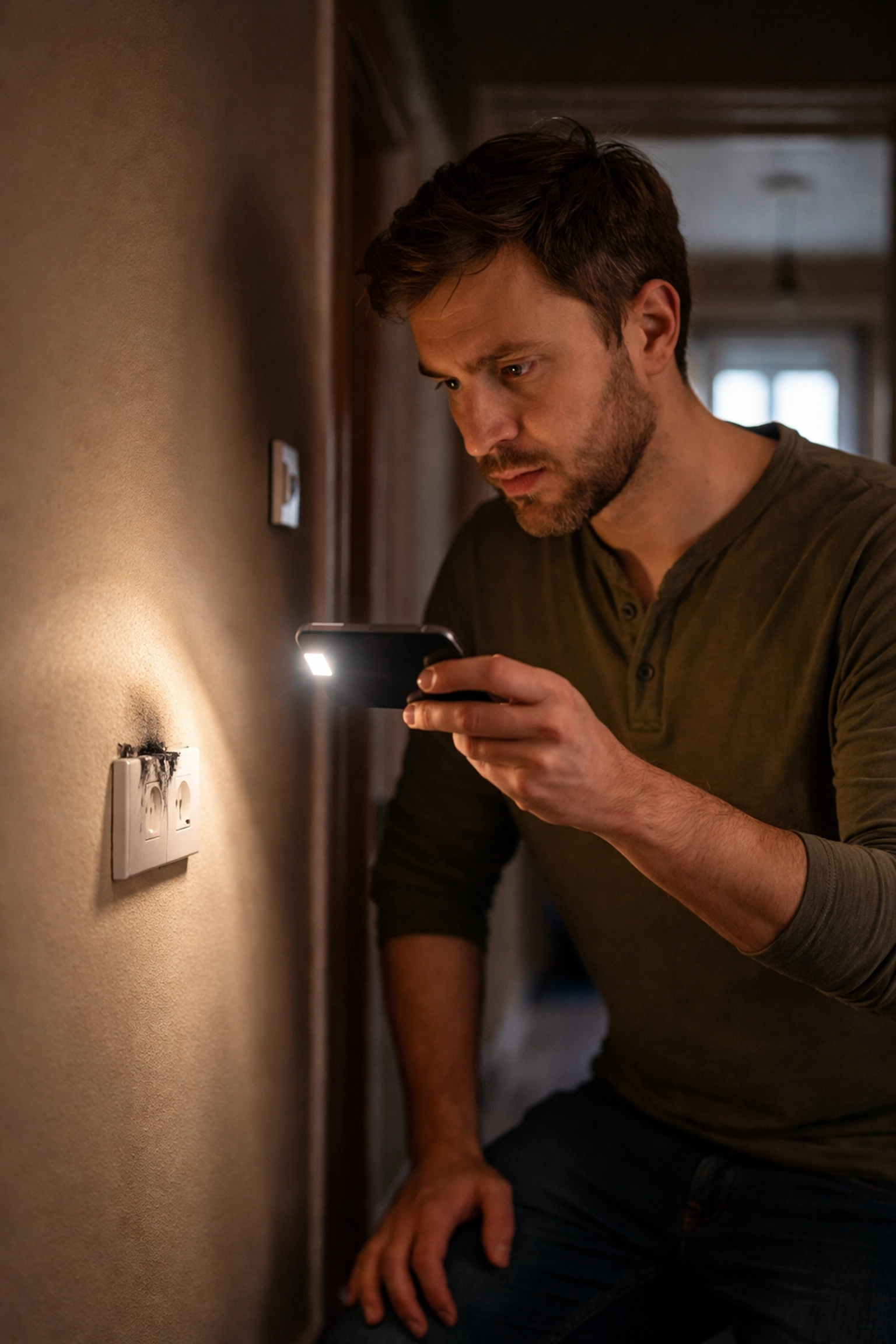
The first moments of any emergency set the tone for everything that follows. Panic leads to poor decisions, so taking a breath and quickly assessing the situation is essential.
Ask yourself these questions:
Is anyone injured or in immediate danger?
Can you see flames, smoke, or sparking?
Is there a burning smell coming from outlets, switches, or appliances?
Has the power gone out completely or partially?
Your answers will determine your next steps. If someone is injured or there are visible flames, call 999 immediately. For less severe situations: like a tripped circuit or a single faulty appliance: you have more time to act methodically.
Step 2: Cut the Power at Your Consumer Unit
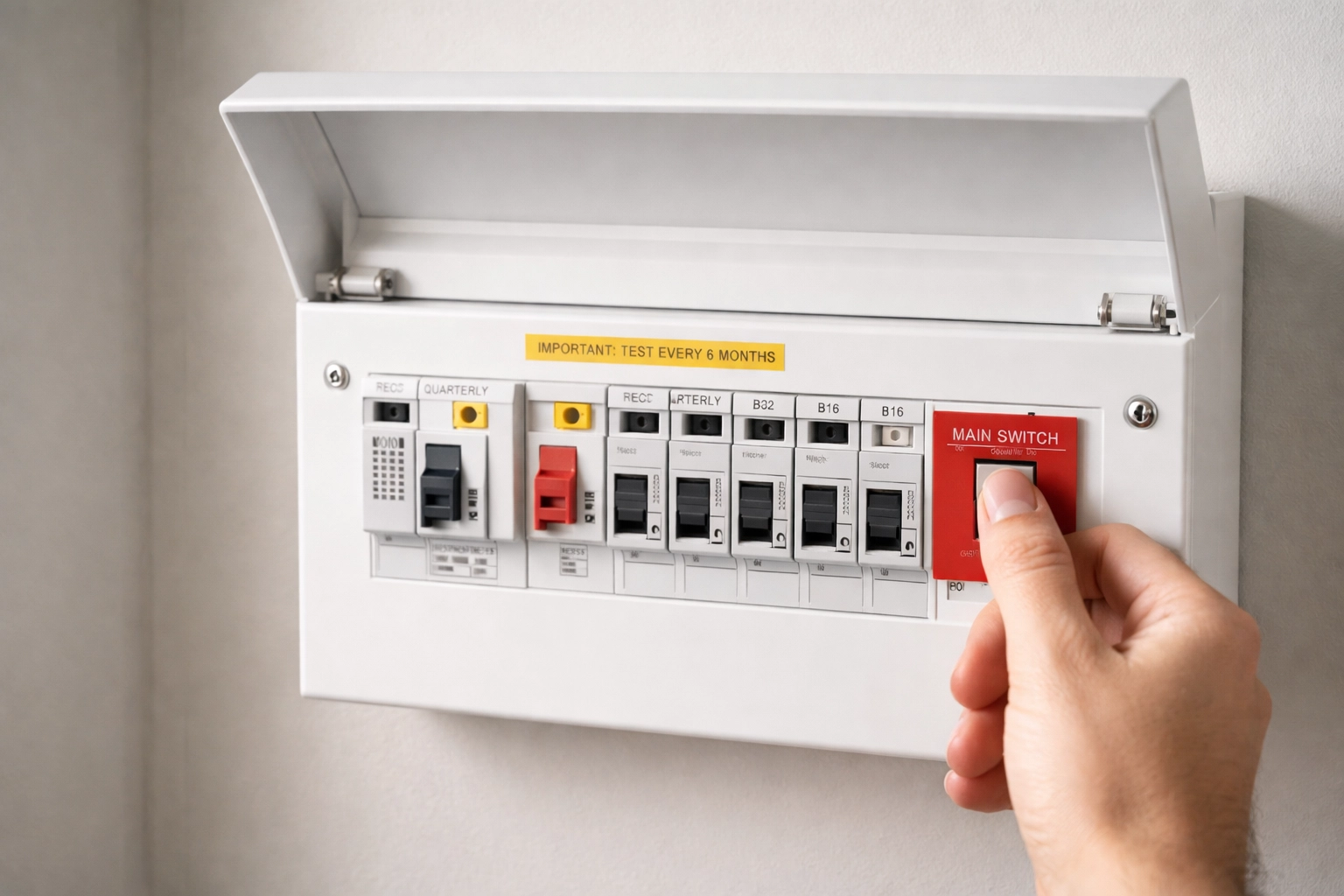
Once you've assessed the situation and confirmed it's safe to move around your home, the next priority is cutting the power. Your consumer unit (also known as a fuse board or breaker box) is the control centre for your home's electricity.
Here's what to do:
Locate your consumer unit – Most are found under the stairs, in a utility room, or near the front door
Switch off the main switch – This large switch at the top of the unit cuts power to your entire home
If safe, identify the affected circuit – Individual switches control different areas of your home, so you may be able to isolate just the problem area
Cutting the power stops electricity flowing to the fault, reducing the risk of fire or further damage. If you cannot safely reach your consumer unit: for example, if it's near flames or in a flooded area: leave the house immediately and wait for emergency services.
Older fuse boards without modern RCD protection can be more dangerous during electrical faults. If your home still has an outdated consumer unit, upgrading your fuse board is one of the most effective ways to improve safety.
Step 3: Handle Specific Emergencies Appropriately
Different electrical emergencies require different responses. Here's how to handle the most common situations Rugby homeowners face:
Electrical Fire
Never use water – Water conducts electricity and can make the situation far more dangerous
Use a fire extinguisher rated for electrical fires (Class E or CO2 extinguisher) if the fire is small and you can do so safely
If in doubt, evacuate – Close doors behind you to slow the fire's spread and call 999 from outside
Someone Receiving an Electric Shock
Do not touch them directly – You could become part of the circuit and receive a shock yourself
Cut the power at the consumer unit if you can reach it safely
If you cannot cut the power, use a non-conductive object (wooden broom handle, plastic chair) to separate them from the source
Call 999 immediately and begin first aid if trained to do so
Burning Smell or Sparking Outlet
Unplug any devices from the affected outlet (only if safe to do so)
Switch off the circuit at your consumer unit
Do not use the outlet until it has been inspected by a qualified electrician in Rugby
Partial Power Outage
Check if it's just your property – Look at neighbouring houses to see if they have power
Check your consumer unit – A tripped RCD or circuit breaker often causes partial outages
If switches keep tripping, there may be a fault that needs professional diagnosis
Step 4: Know What NOT to Do
During an electrical emergency, some instinctive reactions can make things worse. Avoiding these common mistakes is just as important as knowing the right steps.
Never do the following:
Touch electrical equipment with wet hands – Water and electricity are a dangerous combination
Attempt DIY repairs during an emergency – Temporary fixes can create hidden dangers
Ignore warning signs – Burning smells, warm switches, or flickering lights indicate serious problems
Re-enter a property after evacuating until emergency services confirm it's safe
Reset tripping circuits repeatedly – If a breaker keeps tripping, there's an underlying fault that needs professional attention
These precautions protect you and your family while you wait for help to arrive.
Step 5: Call an Emergency Electrician in Rugby
Once everyone is safe and the immediate danger is controlled, the next step is getting professional help. Electrical faults require proper diagnosis and repair by a qualified professional: attempting to fix them yourself can be dangerous and may invalidate your home insurance.
When contacting an emergency electrician in Rugby, have this information ready:
Your address and the best contact number
A description of what happened (sparks, smoke, sounds, smells)
Whether power is currently on or off
Any actions you've already taken
A reliable electrician in Rugby will prioritise genuine emergencies and can often attend the same day. Look for electricians who are registered with a competent person scheme, as this ensures their work meets current safety standards.
For urgent electrical issues, contact a qualified team who can respond quickly and diagnose the problem safely.

Prepare Before an Emergency Happens
The best time to prepare for an electrical emergency is before one occurs. A few simple steps can make a significant difference when something goes wrong.
Preparation checklist:
Know your consumer unit location – Every adult in the household should know where it is and how to switch off the main power
Label your circuits – Mark which switch controls which area of your home
Keep a torch nearby – Power cuts leave you in the dark, so a working torch near your consumer unit is invaluable
Have an emergency kit – Include a torch, batteries, a phone charger, and a Class E fire extinguisher
Schedule regular electrical inspections – An Electrical Installation Condition Report (EICR) identifies potential hazards before they become emergencies
Understanding your home's electrical system turns a frightening situation into a manageable one. For more guidance on handling unexpected electrical issues, this resource on electrical problems provides additional practical advice.
Warning Signs That Indicate Potential Problems
Many electrical emergencies give warning signs before they escalate. Recognising these early can help you address issues before they become dangerous.
Watch for these indicators:
Warm or discoloured outlets and switches – Heat suggests loose connections or overloaded circuits
Burning or unusual smells – Often indicates overheating wires or components
Flickering or dimming lights – May signal loose wiring or an overloaded circuit
Buzzing sounds from outlets or switches – A sign of arcing, which can cause fires
Mild shocks when touching appliances – Indicates a grounding problem that needs immediate attention
Frequently tripping breakers – Your electrical system is telling you something is wrong
If you notice any of these signs, don't wait for an emergency. Contact Rugby electricians to inspect and resolve the issue while it's still manageable.
Keep Your Home Safe
Electrical emergencies can be frightening, but knowing how to respond makes all the difference. By staying calm, cutting the power safely, avoiding common mistakes, and calling a qualified emergency electrician in Rugby, you can protect your family and minimise damage to your home.
Taking time now to understand your electrical system and prepare an emergency plan means you'll be ready if something unexpected happens. Regular inspections and prompt attention to warning signs keep small problems from becoming serious hazards.
For professional electrical services in Rugby: from emergency callouts to routine inspections: explore the full range of services available to keep your home safe and compliant.
Comments